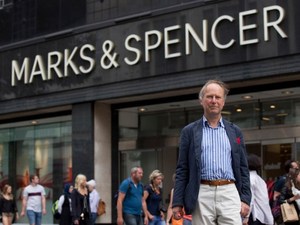
The Shifting Sands of Retail: Why M&S Is Reshaping Its Store Estate
Marks & Spencer, a venerable institution on the British high street, is currently undergoing one of the most significant transformations in its long history. The headlines often focus on store closures, leading to concerns among shoppers and staff alike. While specific news, such as the confirmed closure of the major Swansea branch and its impact on 92 dedicated staff, might seem like a hammer blow, it's crucial to understand that these actions are part of a meticulously planned, UK-wide store rotation programme. M&S is not simply retreating; it's strategically adapting to radical shifts in consumer behaviour and the evolving demands of modern retail. The closure of specific
M&S underperforming stores is a symptom of a much larger, proactive strategy to secure the brand's future.
Decoding the "Legacy Estate": A Major Hurdle for M&S Underperforming Stores
One of the most frequently cited challenges by M&S itself is its "legacy estate." What exactly does this mean? In essence, M&S, like many long-established retailers, operates from a portfolio of properties built and acquired over decades, often designed for a different era of shopping. These are typically large, multi-floor department stores in traditional high street locations, which once thrived as destination shops.
However, the retail landscape has dramatically changed. Consumer habits have shifted from grand, infrequent shopping trips to more frequent, convenient, and often online, purchases. Many of these older buildings present significant hurdles:
- High Operational Costs: Maintaining vast, multi-level stores, particularly in prime city centre locations, incurs substantial overheads in terms of rent, rates, heating, lighting, and staffing.
- Infrastructure Issues: As highlighted by M&S Regional Manager Richard Owen regarding the Swansea store, many older buildings face "practical and operational issues requiring significant investment." This can range from outdated layouts that don't suit modern merchandising, to structural repairs or accessibility challenges.
- Inefficient Space Utilisation: Large spaces may no longer be optimally used, with certain departments drawing less footfall than others, leading to wasted square footage and diminished profitability.
- Suboptimal Location: While once prime, some traditional high street spots now struggle with declining footfall due to out-of-town retail parks, shifting urban demographics, or poor accessibility.
The decision to close an M&S underperforming store, such as the Swansea branch that had "underperformed over a long period," isn't taken lightly. It's a pragmatic recognition that continued investment in a building that fundamentally no longer fits the modern retail model is not viable for long-term growth. The company's longer-term estate strategy has been developed based on stress tests, regional modelling, and efficiency requirements, aiming to reduce its full-line store base from 255 to around 180 in carefully selected "prime and core retail markets." This isn't an abandonment of physical retail, but a commitment to ensure every store contributes positively to the overall business.
The Strategic Pivot: Fewer Full-Line, More Food-Focused Stores
A cornerstone of M&S's new retail strategy is a significant rebalancing of its store portfolio. The aim is to reduce the number of large "full-line" stores, which typically stock clothing, home goods, and food, and instead concentrate on expanding its highly successful food-only outlets, known as Simply Food stores.
The plan involves closing 67 full-line stores over the next five years as part of a broader ambition to reduce this category from 247 down to 180 by 2028. Simultaneously, M&S is planning to open 104 new Simply Food shops. This strategic shift is driven by several compelling factors:
- Food as a Footfall Driver: M&S Food has consistently been a strong performer, known for its quality and innovation. Food retail generally benefits from higher frequency of purchase, providing a constant stream of customers.
- Convenience and Localisation: Smaller Simply Food stores can be more easily integrated into local communities, transport hubs, and retail parks, offering convenience for daily or weekly shopping without the need for a major trip to a city centre department store.
- Reduced Overhead: Food-only stores typically have smaller footprints, lower operational costs, and are quicker to establish and adapt.
- Complementary to Online: While clothing and home sales have largely migrated online, the demand for fresh, quality food items remains strongly tied to physical shopping experiences.
This dual strategy allows M&S to leverage its strengths in food while making its clothing and home offerings more efficient and accessible, often through a blend of optimized physical stores and a robust online presence. It's a clear statement that M&S believes in stores, but they need to be the
right stores, in the right location, offering a brilliant omni-channel experience. This approach underpins the strategy behind the
M&S Estate Plan: 67 Full-Line Stores Shut, 104 Food Shops Open.
Embracing Omni-Channel Retail and a Modern Customer Journey
The term "omni-channel" is key to understanding M&S's current trajectory. It refers to a seamless, integrated customer experience across all touchpoints – be it online, mobile, or in a physical store. For M&S, this means:
- Integration of Online and Offline: Customers should be able to browse clothing online, reserve items for in-store pickup, return online purchases at any store, or even order groceries for home delivery or collection from a Simply Food branch.
- Data-Driven Decisions: Analysing customer shopping habits – what they buy, where they buy it, and how they interact with the brand – allows M&S to tailor its offerings and store formats more effectively. Richard Owen's comment that "customer shopping habits are changing" is central to this.
- Optimised Store Formats: The physical stores that remain or are newly opened will be designed for efficiency and experience. This might mean smaller, more curated full-line stores focusing on best-sellers, or stores with enhanced digital capabilities like self-checkouts and interactive displays.
This shift isn't about abandoning the high street; it's about reimagining M&S's physical presence to complement its digital capabilities, ensuring that every customer interaction, regardless of channel, is positive and efficient.
Impact on Staff, Communities, and the Future Vision for M&S
While strategic shifts are crucial for business viability, they inevitably come with human costs. The closure of any store, especially one that has been a community staple for decades like the Swansea branch, is deeply disappointing for both staff and shoppers. M&S acknowledges this, stating that its priority is "supporting colleagues through consultation, including finding alternative roles at nearby stores wherever possible."
Local councils, such as Swansea Council, also express disappointment but recognise the necessity of such decisions as part of a "wider national strategy." Significantly, M&S has stated its commitment to exploring options for an alternative, suitable store location in Swansea, highlighting that the decision is "not a reflection on Swansea as a retail destination" but on the suitability of the *current building*. This suggests a desire to remain part of vibrant communities, albeit in a more modern, efficient format.
The ongoing regeneration efforts in many city centres, including Swansea, present an opportunity for M&S to potentially reopen in new, purpose-built or redeveloped retail spaces that align with its future vision. This adaptation allows M&S to remain a relevant and competitive brand in a fiercely contested retail landscape.
Conclusion
M&S's decision to close certain stores, particularly its legacy full-line branches, is a complex yet essential step in its ongoing transformation. It's a proactive response to fundamental changes in consumer behaviour, the inherent challenges of maintaining an outdated estate, and a strategic pivot towards a more agile, food-centric, and omni-channel retail model. While store closures can be unsettling, they are a necessary part of M&S's long-term growth strategy, aimed at ensuring the iconic British brand continues to thrive by operating the right stores, in the right places, to meet the demands of the modern shopper. This strategic recalibration is not about contraction, but about future-proofing M&S for sustained success in a rapidly evolving market.